Judicial Complex
Necochea, Argentina
Competition project -MVAA team

Proposal for the Judicial Complex in Necochea, Argentina
Response to Pre-existing Conditions and Their Solutions: The project addresses the strict programmatic conditions and the inherent complexity of judicial activities. A modular system is used to organize the diverse functions, optimizing formal, technical, and construction responses.
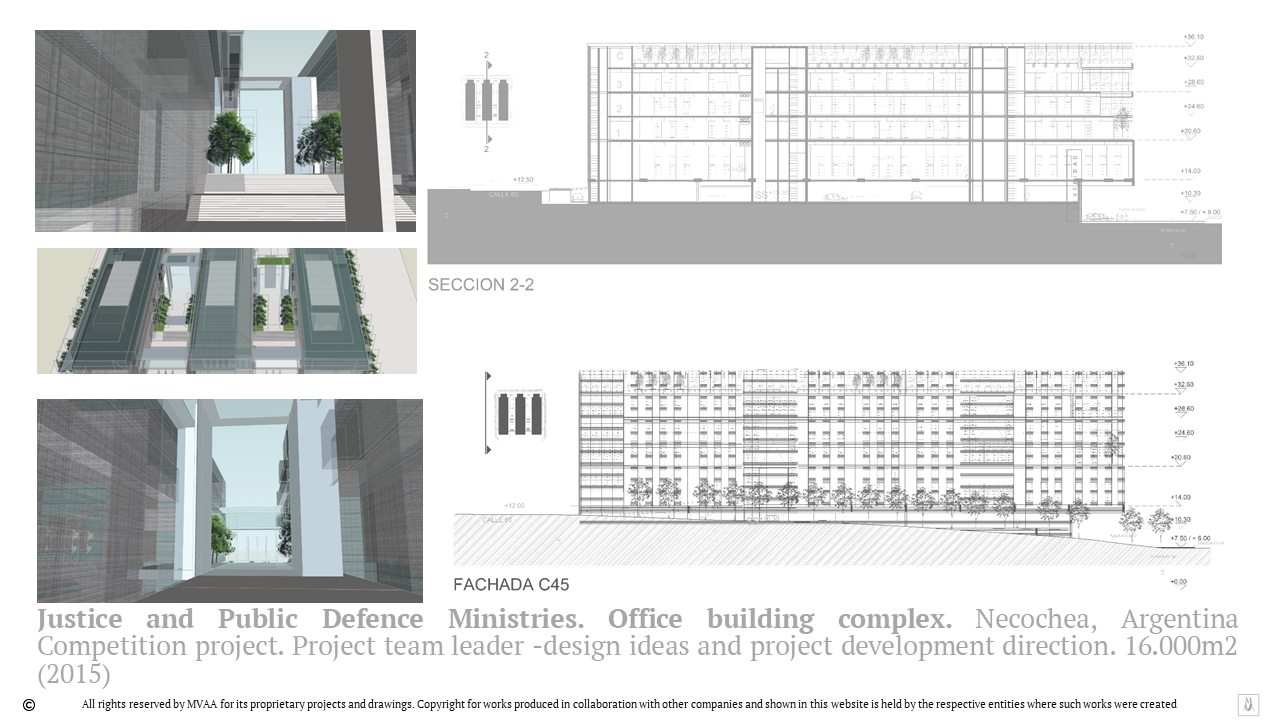
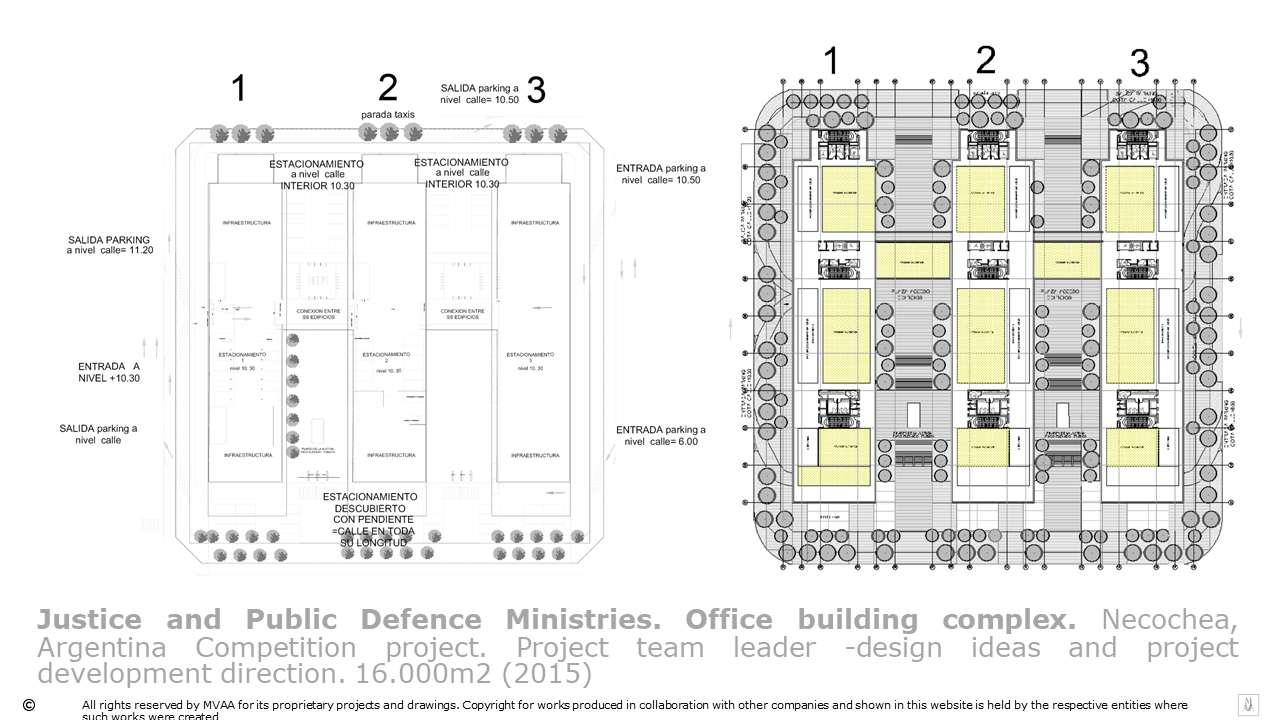
The site's topography presents several meters of height difference between Calle 60 and Av. 58. This, along with the floodplain elevation, allows us to create two platforms that form the basis for vehicular access:
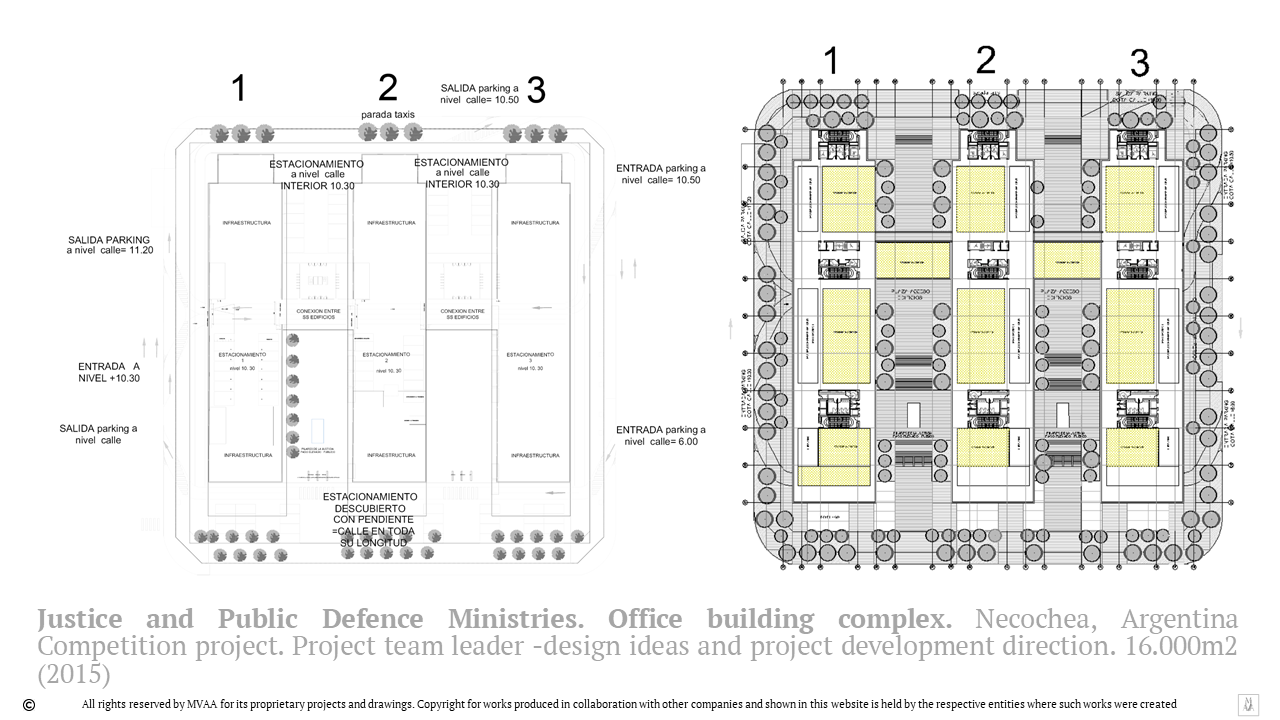
A) A platform at +10.30 meters (historical flood limit), which houses covered and uncovered parking, temporary loading and unloading zones, and a perimeter road for fire trucks, security, and access to uncovered parking on Calle 60.
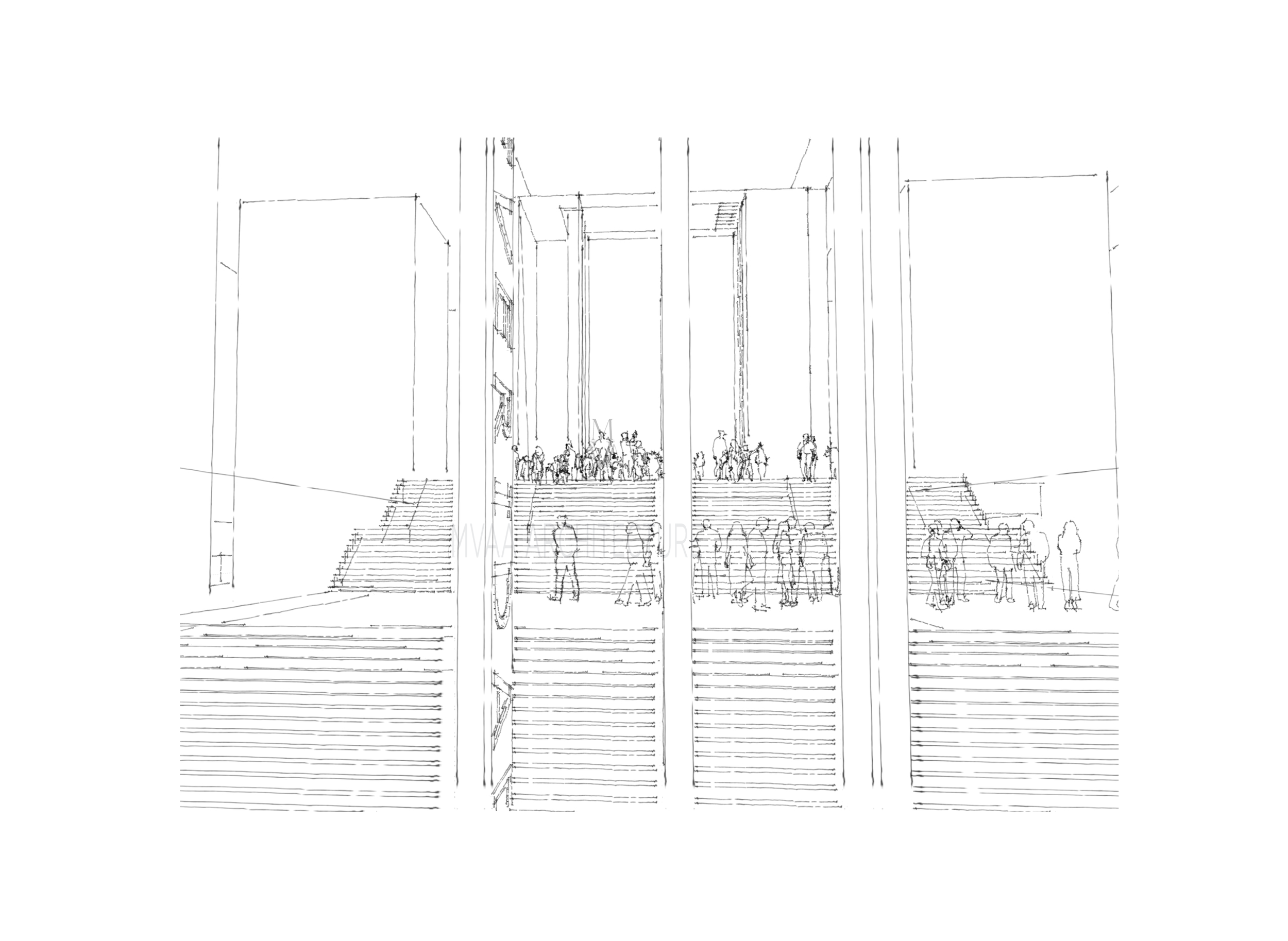
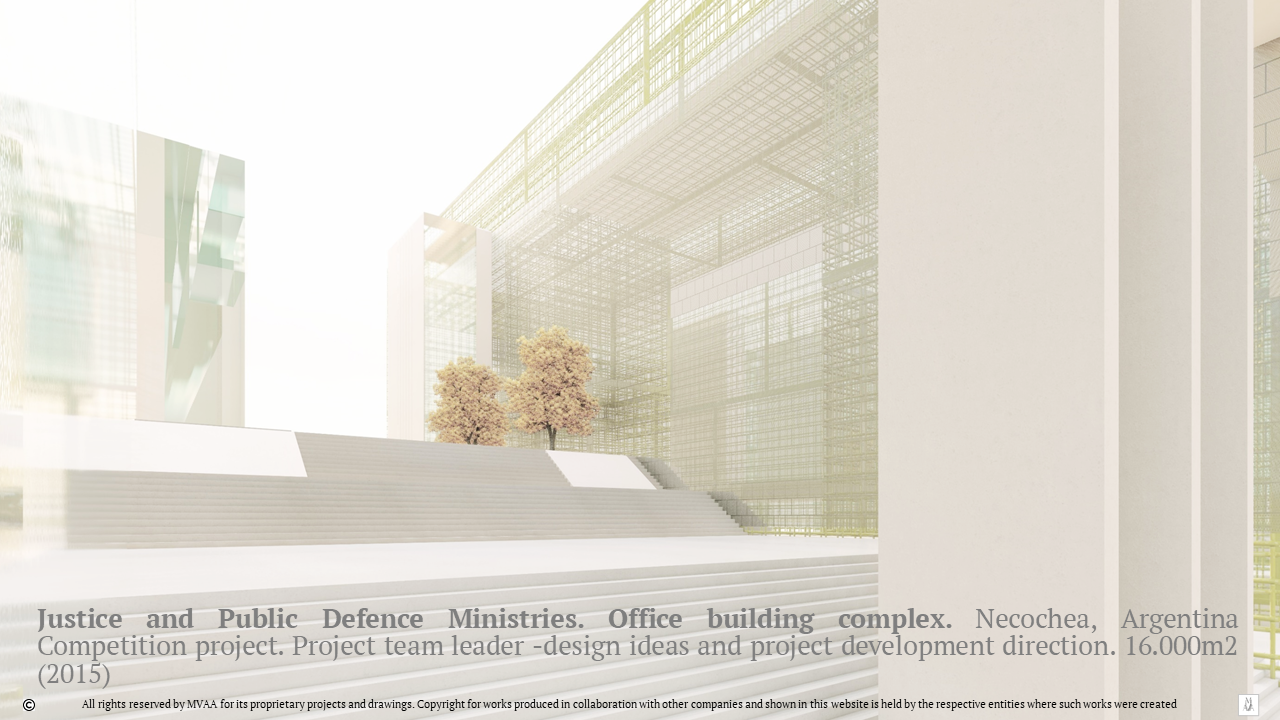
B) A platform at a variable height of 6.00 to 7.50 meters along Av. 58, serving as the pedestrian and vehicular entrance. This platform creates a monumental, institutional façade for the judicial complex.
The ground level is at an elevation of 14.00 meters.
Accessibility:
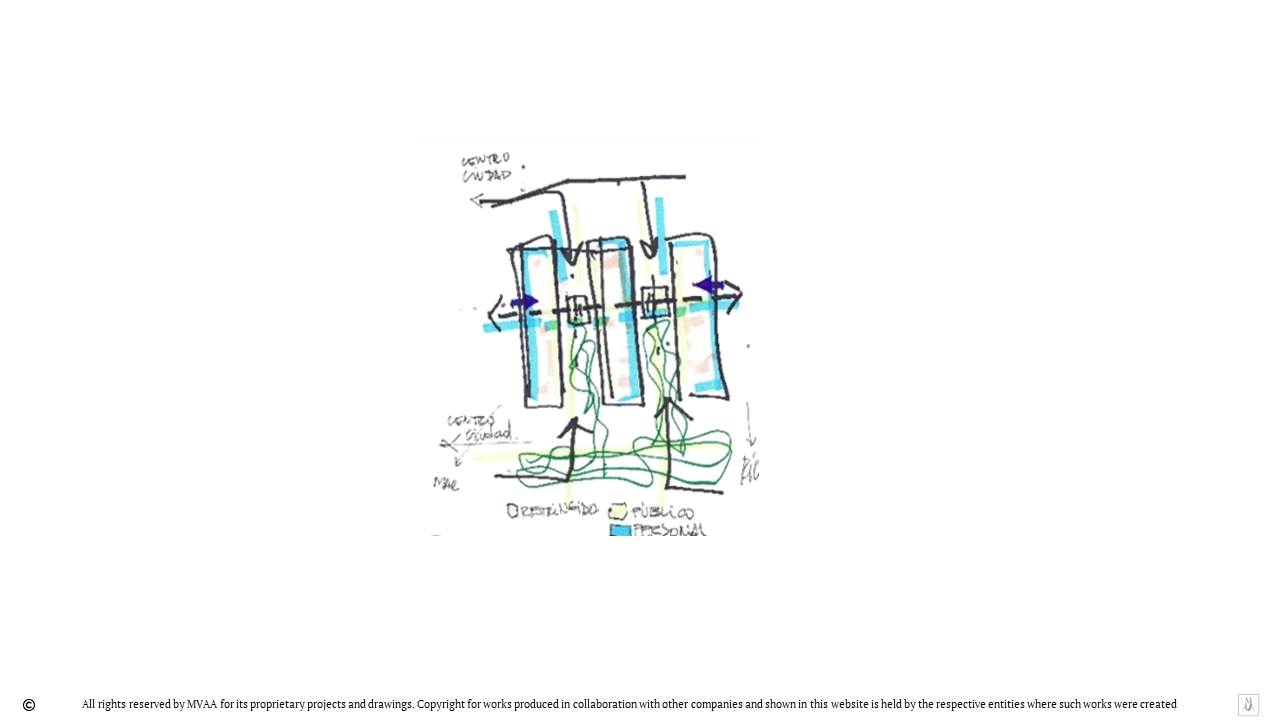
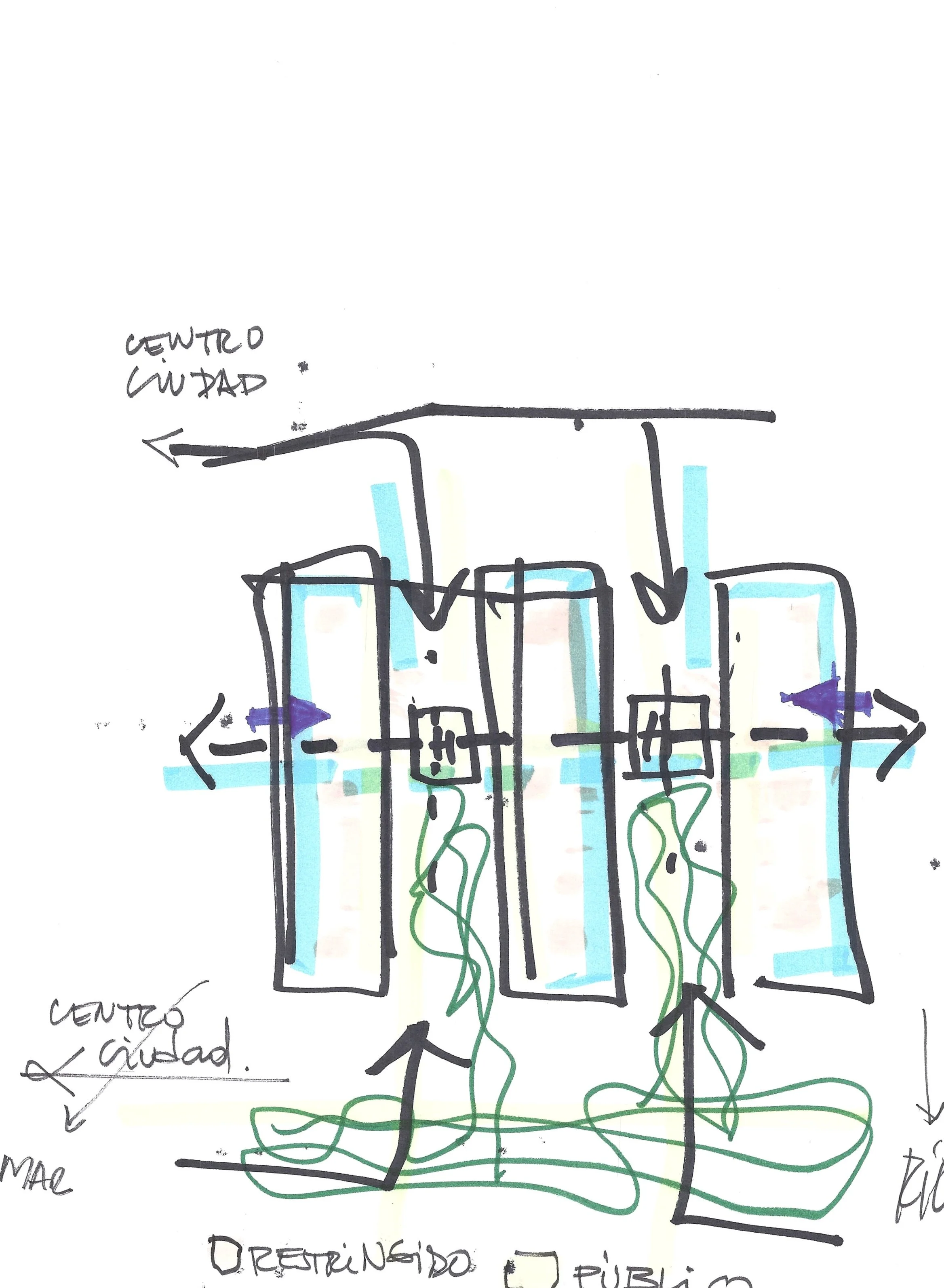
The project has a clear and defined circulation pattern. There are designated routes for the public (visitors, litigants, lawyers, witnesses, and employees) and restricted routes for judges, officials, staff, detainees, and security forces. The aim is to create an efficient and differentiated pedestrian and vehicular network. Parking is organized as follows:
The public enters through the most prominent streets: Av. 58 and Calle 60.
Senior personnel have multiple access points, depending on the function of each area. They can enter at level 10.30, level 6.00, or level 14.00.
Staff have various access points depending on the area where they work, using magnetic cards for lateral building entries and to operate security barriers in the main hall.
Detainees and security forces enter through the basement level of Building 2, which features a closed-off area with a lift that directly connects to the detention centre on the mezzanine. The detention area has a parallel circulation system to that of the staff, terminating in detainee elevators at both ends.
Phasing and Independence:
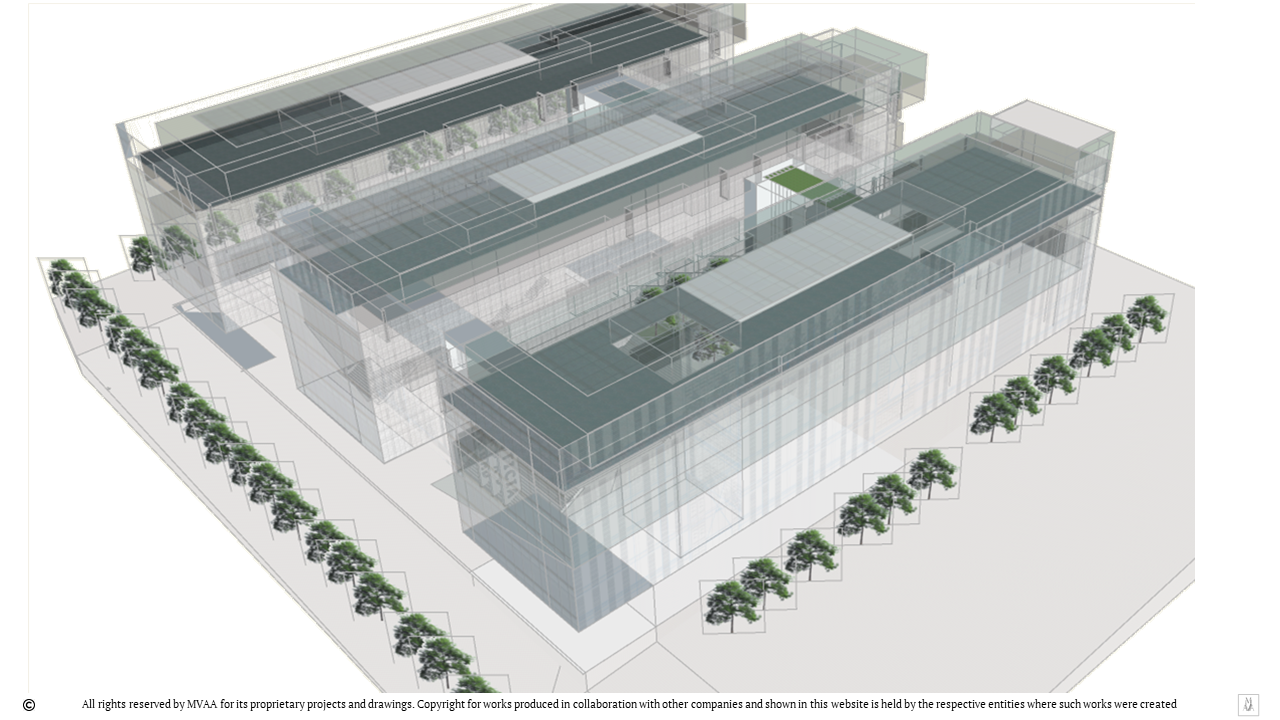
The project consists of three independent blocks that maintain physical and functional independence. This allows for a phased construction process, ensuring security for users in the already constructed sections.
Integration with the City:
Located in a sector undergoing cultural and functional changes, the complex reinforces the influence of these recent developments, acting as a promoter or transformer of a city that will benefit from a complex of this nature.
Differentiated Internal Circulation:
Public circulation is distinct from staff circulation, intersecting only when required by the program. At the same time, connections between the three buildings are guaranteed through pedestrian bridges if necessary.
Sustainability:
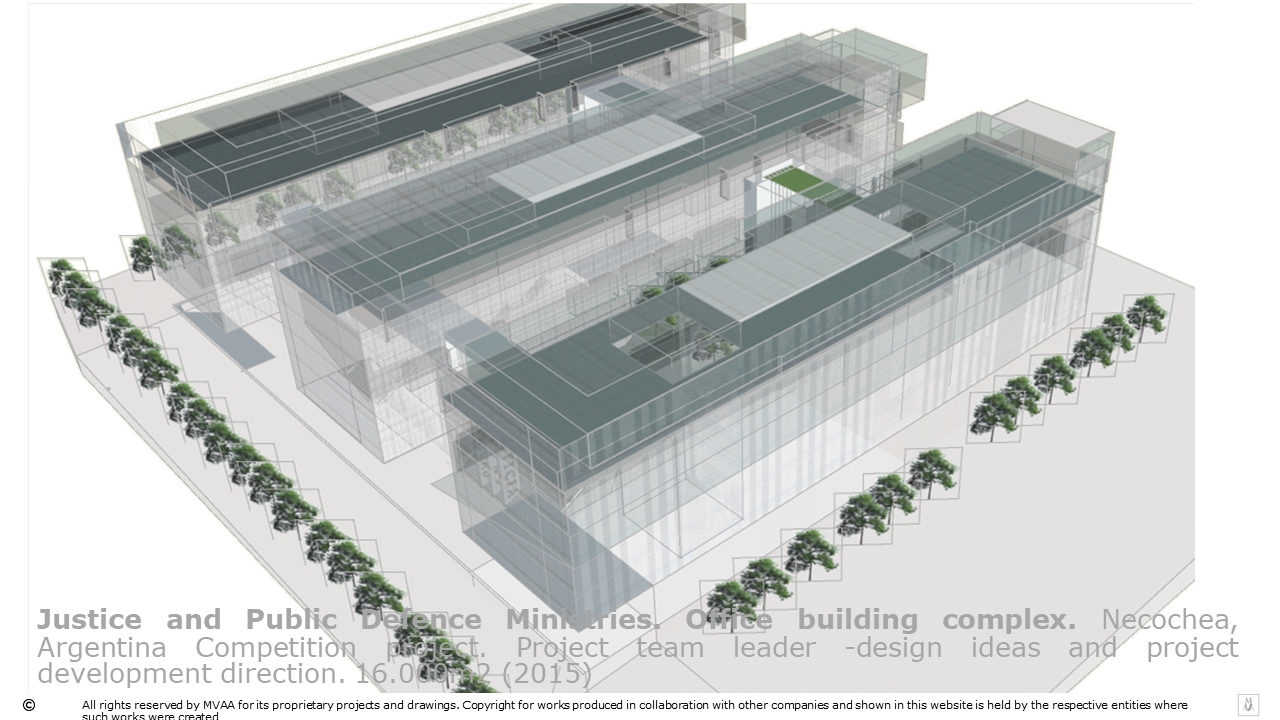
The building incorporates sustainability features such as green terraces, rainwater collection tanks, and photovoltaic (PV) panels. Green spaces and terraces are located at the ends of Buildings 1 and 2.
Façade Design:
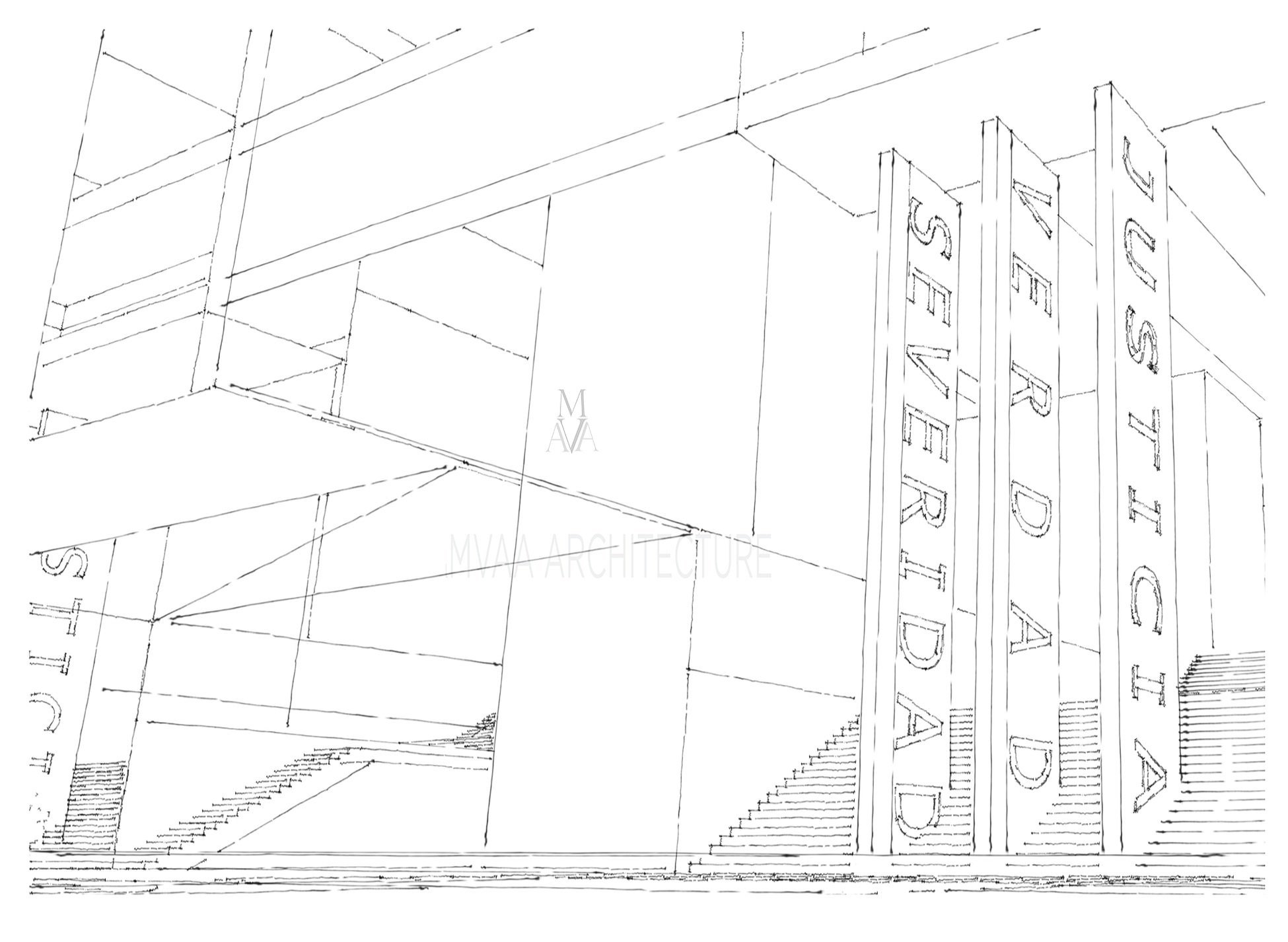
The façade is modular, with flat panels made from different materials, depending on the orientation and function of each section. A 1.20-meter module was studied for constructing the entire façade, using materials such as fibre cement plates, metal mesh, and double glass panels with solar filters. These elements follow a design inspired by the concepts of justice, with each area named for easy user navigation and orientation.
Design Concepts:
The building represents justice as the protector of citizens, and its identity gives the city a sense of magnificence associated with justice and its execution.
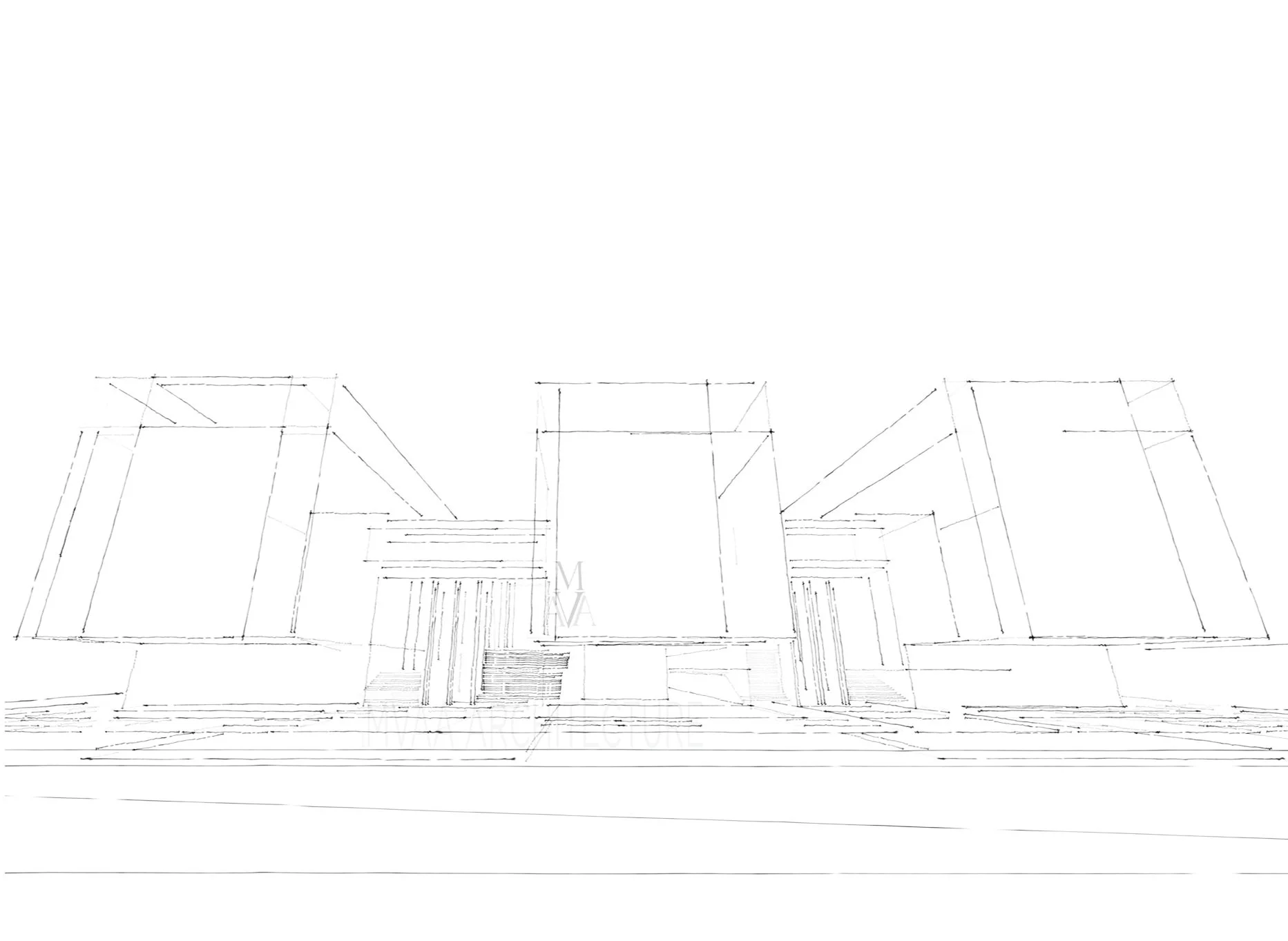
Three horizontal volumes are intersected by a grand perpendicular hall, which contains expansion areas on the upper floors.
Dual Scale Design:
The building has two scales: urban and institutional. The façades facing Calle 60 are lower, offering easier access and representing the urban scale.
In contrast, the façades facing Av. 58 and the staircases reflect a more monumental and regional character, giving the building an institutional feel.
This judicial complex objective was transforming the citizens’ relationship with justice for the better.
Credits
Eduardo Villaverde - Local Architect/ adviser
Marcela Villaverde- Architect/Lead Designer and project direction
Valeria Felix, Beatriz H, Magdalena Pizzi, Milagros Pizzi. Architects Production team
All rights reserved by MVAA for its proprietary projects and drawings. Copyright for works produced in collaboration with other companies and shown in this website is held by the respective entities where such works were created